>>Click Here to Claim your Free Bottle<<

>>Click Here to Claim your Free Bottle<<
After last year’s CPU chaos, Intel has simplified its chipset and processor lineup for 2018, going all in on the new 300 series and Coffee Lake for the standard consumer market. It also doubled down with 9th Gen CPUs that are backward compatible with most Z370 boards, and the new Z390 motherboards likewise work with 8th Gen Intel CPUs.
A streamlined Intel doesn’t mean less overall component choice, however. AMD has also been busy, introducing both Ryzen 2 and its accompanying 400-series motherboards, offering performance and feature improvements to an already competitive platform. Ryzen 2 has proven effective at stealing market share from Intel, especially if you’re looking to boost CPU core counts without spending a lot of money.
In addition to AMD and Intel’s newest hardware, we still have recommendations for Z270 and X370 platforms, but expect these latter categories to slim and eventually move to legacy status as the boards disappear from retail channels.
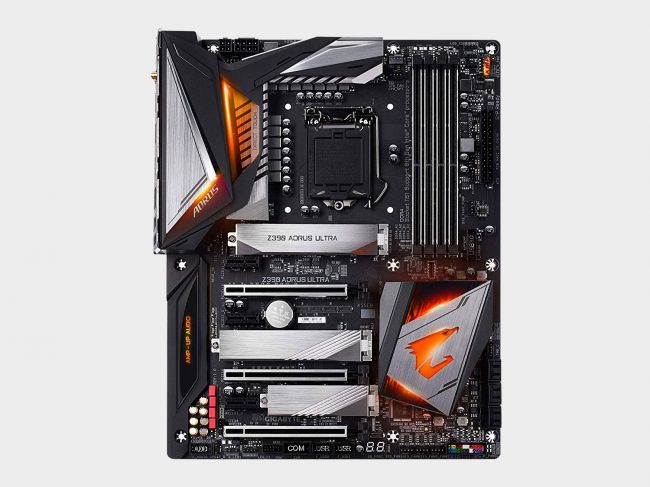
Gigabyte isn’t as flashy as the other top tier motherboard makers, but they’ve managed to accumulate plenty of recommendations of late. We’ve liked the Aorus branded motherboards starting with Skylake in 2016, and its Ryzen boards have been excellent all-around picks.
The Gigabyte Z390 Aorus Ultra competes with the MSI Z390 Gaming Pro Carbon AC and the Asus ROG Maximus XI Hero (Wi-Fi), with a better price and features. It has triple M.2 slots, Intel Wi-Fi Wave2 and Ethernet, a full RGB treatment with multiple headers, and ALC1220 audio. You’d have climb to the top of the product stack to get the same from MSI and ASUS, both of whom offer more polish but also charge plenty for the privilege.
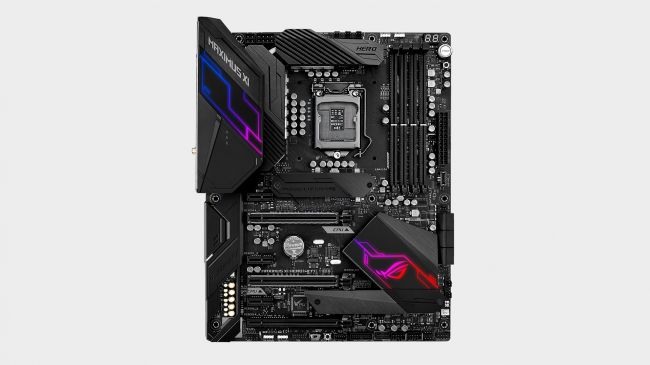
The Asus ROG Maximus XI Hero (Wi-Fi AC) is the latest in a long line of popular boards. While Asus offers the Code, Formula, and Apex boards a step above the Hero, we found little reason to go with the pricier models. The minor bumps in speed, features, or fashion that costlier boards provide are difficult to justify. This is a minor update to the previous Maximus X Hero Wi-Fi, which we also liked.
This year’s Hero adds 802.11ac 2×2 MU-MIMO Wi-Fi to the networking mix (a non-wireless version is available for a few bucks less). Overclocking and performance remains first in class, in league with boards costing a third more. The board is nearly perfect, with better Wi-Fi and an extra M.2 slot on our short list of potential improvements.
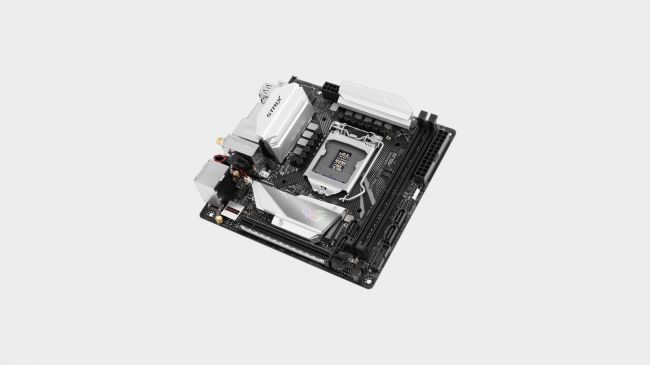
Asus’s ITX Strix entry slips ahead of ASRock’s Killer ITX offering to earn first place in this boutique segment. Despite its diminutive size and paucity of upgrade options, the ROG Strix Z370-I Gaming provides excellent performance and value. Boasting stable 5GHz overclocks using several memory speeds, including 3600MHz with tweaking, its single PCIe x16 slot pushed a GTX 1080 Ti to speeds that matched or exceeded most Z370 ATX boards during testing.
The board has a lengthy features list, with no shortcomings despite the small form factor, including dual PCIe Gen3 x4 M.2 slots, Intel v219 Ethernet, Intel 8265 2×2 802.11ac Wi-Fi, and an ALC1220A codec supported by isolated circuitry and headphone amps. Despite the dense set of features, the Strix Z370-I’s clean design makes for quick system assembly and configuration. Just be sure to install that bottom-mounted M.2 drive beforehand or pick a case with a cut out in the right area, or you’ll be taking everything apart again.
There’s a Z390-I model now as well, which we haven’t tested yet. It costs more and for most users the Z370-I remains a great choice.
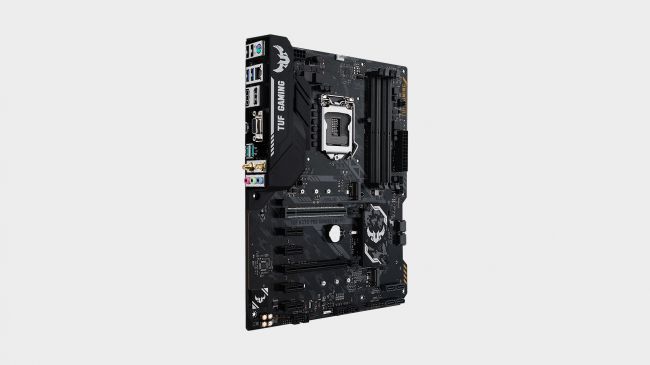
ASUS claims a third category for Coffee Lake builds with its TUF H370 Pro Gaming Wi-Fi making an impressive debut for the series in our guides. It sports a bare-it-all retro look that back-to-basics rig builders will love, with a simple black and silver aesthetic and just a touch of RGB lighting along the right edge. It looks sharp and supports almost any color combination you toss at it.
Under the hood, the TUF Pro Gaming packs dual M.2 slots, 10Gbs Gen2 USB 3.1, Intel v219 Ethernet, and a robust 2×2 Intel 9560 802.11ac adaptor that supports MU-MIMO and 160MHz channels, shaming the competition in a price segment where Wi-Fi is rarely found. Audio is less impressive, opting for the older ALC887 codec. Overclocking and higher memory speeds aren’t supported with the H370 chipset, but that doesn’t hold the TUF Pro Gaming back in real-world testing. Put your money into a faster GPU if you care about gaming, and don’t worry as much about the RAM speed.
 Best Gaming Motherboards in 2018